
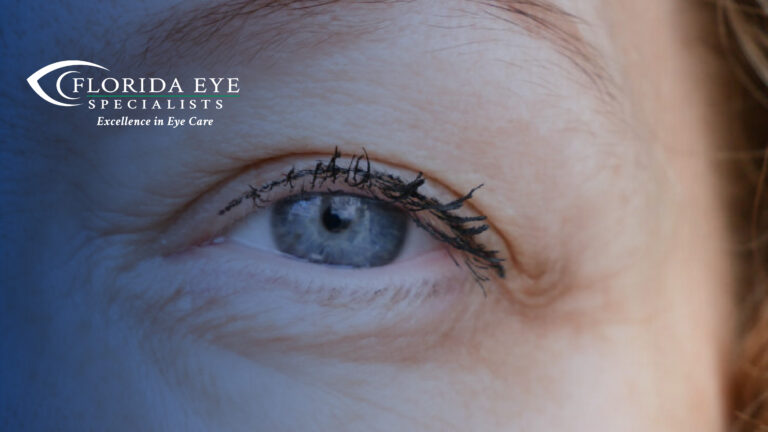
Do you have trouble keeping your eyelids open? Are they beginning to affect your vision? Drooping eyelids, also known as ptosis or dermatochalasis, are very common and often develop with age as the skin around the eye loses elasticity and the eyelid muscles weaken.
As this happens, excess skin or fat accumulates above and below the eye. This may lead to sagging eyebrow(s) and bags below the eye(s). This has made upper and lower blepharoplasties–often referred to as eye lifts–increasingly popular. Read on to learn if you may be a candidate for droopy eyelid surgery.
How Droopy Eyelids Affect Your Vision
Drooping upper eyelids may seem like only a cosmetic issue, but they can significantly impact your vision. Severe drooping or sagging of the lids can compromise your peripheral vision and make everyday activities like reading or driving more difficult.
“Droopy eyelids can prevent you from seeing as much light because there’s a shadow from your upper eyelids that can obscure your vision,” explained Dr. David A. Kostick, a board-certified ophthalmologist and fellow of the American College of Surgeons. “Often, people have to use their eyebrows to raise their eyelids. That can cause headaches by the end of the day, and it causes wrinkles as well.”
While many patients undergo eyelid surgery to improve their cosmetic appearance, this procedure may also be functionally necessary to improve their vision and quality of life.
Signs You May Need Droopy Eyelid Surgery
According to Dr. Kostick, there are a few key signs you may need droopy eyelid surgery, or eyelid ptosis repair.
“If you feel like you can’t see as well as you used to if you’re using your eyebrows to lift your eyelids, or if you have to raise your head to see, these are all signs you may need surgery,” he said. “I also tell my patients, if you use your hands to lift your eyelids manually and can see better, that’s a big sign that surgery would make a difference.”
You may be a candidate for droopy eyelid surgery if you experience:
- Sagging skin on the upper or lower eyelids
- Obstructed vision caused by low-hanging eyelids
- Heavy eyelids that make it difficult to keep your eyes open
- A persistent “tired” or “sleepy” appearance
How Eyelid Surgery Can Improve Vision and Appearance
During droopy eyelid surgery, a surgeon removes the excess skin, lifts the brow, or tightens the eyelid muscle that is causing the upper lid to droop. This may enhance your field of vision, allowing you to see more of your peripheral vision. Many patients also report a much more youthful and well-rested appearance after having this surgery.
Types of Cosmetic Eye Procedures
Upper and Lower Blepharoplasty (Eyelid Surgery)
Blepharoplasty removes excess skin and fat from the eyelids, improving vision and reducing sagging. Upper blepharoplasty lifts droopy eyelids, while lower blepharoplasty helps smooth out under-eye bags.
Brow Lift
Raises the brow line to make your forehead and eye area look younger.
Mid-Face Lift or Cheek Lift
Tightens sagging skin around the cheeks and below the eyes, improving skin elasticity and reducing signs of aging from sun damage.
Fat Grafting
Adds volume to sunken or hollow areas of the face. Fat is taken from another part of your body, like your abdomen, and grafted to the face to enhance contours and improve skin texture. This procedure helps rejuvenate and restore facial volume.
Erbium Laser Skin Resurfacing
Reduces wrinkles and rejuvenates your skin. Can be done at the same time as your eyelid surgery.
What to Expect During Eyelid Surgery
Blepharoplasty is typically an outpatient procedure. Before surgery, patients undergo a cosmetic eyelid evaluation. This includes an eye exam, vision testing, eye pressure measurements, and ocular surface assessment. This evaluation helps determine whether the procedure is functional or cosmetic and ensures the eyes are healthy enough for surgery.
“We numb around the eyelid very well so that the patient is comfortable,” Dr. Kostick explained. “Afterwards, we ask our patients to take it very easy, especially during the first three days. They use an ointment twice a day and do a lot of icing. We are a team with our patients because we want them to achieve their goals, and that’s why we love our jobs.”
Cost of Droopy Eyelid Surgery and Insurance Coverage
When droopy eyelid surgery is deemed medically necessary due to vision impairment, insurance may cover part or all of the procedure. The cost for cosmetic eye procedures varies based on the type of procedure and complexity. During your consultation, our care team will review pricing, coverage, and financing options.
Droopy Eyelid After Cataract Surgery
It’s not uncommon for some patients to develop post-surgical ptosis after cataract surgery. The good news is that this side effect is often short-lived. Most patients recover within six months.
If drooping eyelids are obscuring your vision or making you self-conscious, you may benefit from blepharoplasty.
Why Choose our Jacksonville Oculoplastic Specialists
Dr. Kostick, a renowned oculoplastic surgeon, is fellowship-trained in ophthalmic plastic and reconstructive surgery, including surgery for drooping eyelids. Before coming to Florida Eye Specialists, he practiced at the Mayo Clinic for over 15 years.
Joining Dr. Kostick is board-certified ophthalmologist Dr. Irene T. Lee. With ASOPRS fellowship training in Oculofacial Plastic & Reconstructive Surgery, she specializes in functional and aesthetic surgery of the eye area.
Our oculoplastics team and specialized cosmetic consultants will walk you through all of your treatment options for droopy eyelids and bags under your eyes.
Schedule a Consultation with Florida Eye Specialists
If droopy eyelids are affecting your vision, comfort, or confidence, a consultation with an experienced oculoplastic specialist can help you understand your options and determine the best path forward. Book an oculoplastics consultation today.